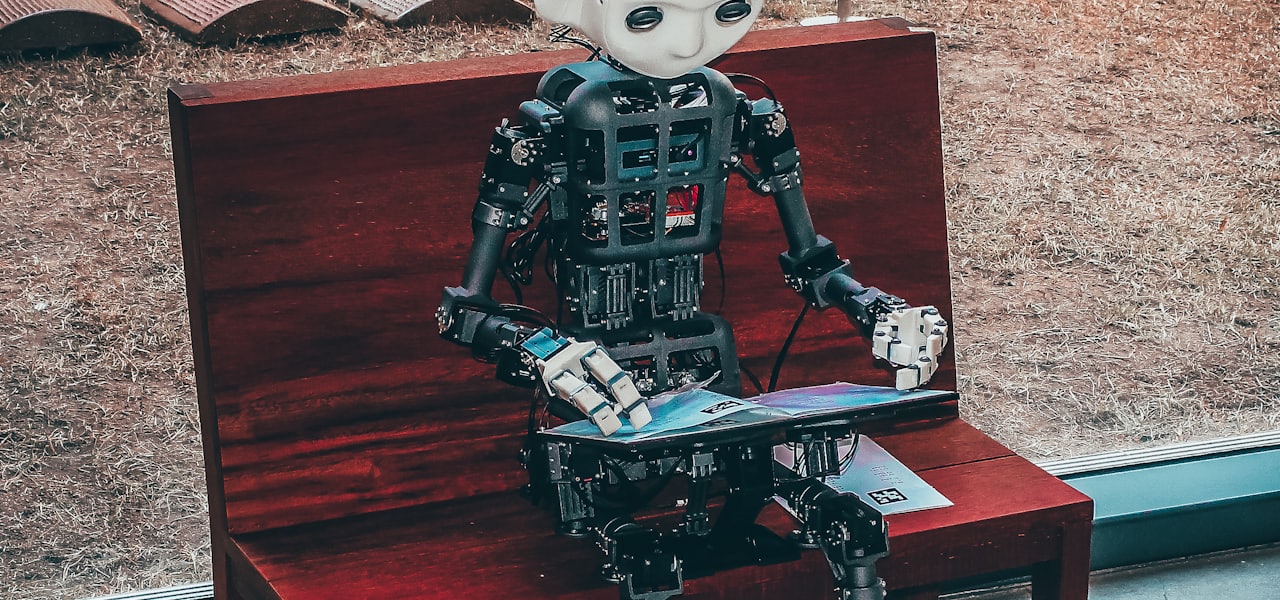
A virtual assistant (VA) is a software agent that can perform a range of tasks or services for a user based on user input, such as commands or questions, including verbal ones. Such technologies often incorporate chatbot capabilities to streamline task execution. The interaction may be via text, graphical interface, or voice, as some virtual assistants are able to interpret human speech and respond via synthesized voices. In many cases, users can ask their virtual assistants questions, control home automation devices and media playback, and manage other basic tasks such as email, to-do lists, and calendars – all with verbal commands. In recent years, prominent virtual assistants for direct consumer use have included Apple Siri, Amazon Alexa, Google Assistant (Gemini), Microsoft Copilot and Samsung Bixby. Also, companies in various industries often incorporate some kind of virtual assistant technology into their customer service or support. Into the 2020s, the emergence of artificial intelligence based chatbots, such as ChatGPT, has brought increased capability and interest to the field of virtual assistant products and services. == History == === Experimental decades: 1910s–1980s === Radio Rex was the first voice-activated toy, patented in 1916 and released in 1922. It was a wooden toy in the shape of a dog that would come out of its house when its name is called. In 1952, Bell Labs presented "Audrey", the Automatic Digit Recognition machine. It occupied a six-foot-high relay rack, consumed substantial power, had streams of cables and exhibited the myriad maintenance problems associated with complex vacuum-tube circuitry. It could recognize the fundamental units of speech, phonemes. It was limited to the accurate recognition of digits spoken by designated talkers. It could therefore be used for voice dialing, but in most cases, push-button dialing was cheaper and faster, rather than speaking the consecutive digits. Another early tool which was enabled to perform digital speech recognition was the IBM Shoebox voice-activated calculator, presented to the general public during the 1962 Seattle World's Fair after its initial market launch in 1961. This early computer, developed almost 20 years before the introduction of the first IBM Personal Computer in 1981, was able to recognize 16 spoken words and the digits 0 to 9. The first natural language processing computer program or the chatbot ELIZA was developed by MIT professor Joseph Weizenbaum in the 1960s. It was created to "demonstrate that the communication between man and machine was superficial". ELIZA used pattern matching and substitution methodology into scripted responses to simulate conversation, which gave an illusion of understanding on the part of the program. Weizenbaum's own secretary reportedly asked Weizenbaum to leave the room so that she and ELIZA could have a real conversation. Weizenbaum was surprised by this, later writing: "I had not realized ... that extremely short exposures to a relatively simple computer program could induce powerful delusional thinking in quite normal people. This gave name to the ELIZA effect, the tendency to unconsciously assume computer behaviors are analogous to human behaviors; that is, anthropomorphisation, a phenomenon present in human interactions with virtual assistants. The next milestone in the development of voice recognition technology was achieved in the 1970s at the Carnegie Mellon University in Pittsburgh, Pennsylvania with substantial support of the United States Department of Defense and its DARPA agency, funded five years of a Speech Understanding Research program, aiming to reach a minimum vocabulary of 1,000 words. Companies and academia including IBM, Carnegie Mellon University (CMU) and Stanford Research Institute took part in the program. The result was "Harpy", it mastered about 1000 words, the vocabulary of a three-year-old and it could understand sentences. It could process speech that followed pre-programmed vocabulary, pronunciation, and grammar structures to determine which sequences of words made sense together, and thus reducing speech recognition errors. In 1986, Tangora was an upgrade of the Shoebox, it was a voice recognizing typewriter. Named after the world's fastest typist at the time, it had a vocabulary of 20,000 words and used prediction to decide the most likely result based on what was said in the past. IBM's approach was based on a hidden Markov model, which adds statistics to digital signal processing techniques. The method makes it possible to predict the most likely phonemes to follow a given phoneme. Still each speaker had to individually train the typewriter to recognize their voice, and pause between each word. In 1983, Gus Searcy invented the "Butler in a Box", an electronic voice home controller system. === Birth of smart virtual assistants: 1990s–2010s === In the 1990s, digital speech recognition technology became a feature of the personal computer with IBM, Philips and Lernout & Hauspie fighting for customers. Much later the market launch of the first smartphone IBM Simon in 1994 laid the foundation for smart virtual assistants as we know them today. In 1997, Dragon's NaturallySpeaking software could recognize and transcribe natural human speech without pauses between each word into a document at a rate of 100 words per minute. A version of Naturally Speaking is still available for download and it is still used today, for instance, by many doctors in the US and the UK to document their medical records. In 2001 Colloquis publicly launched SmarterChild, on platforms like AIM and MSN Messenger. While entirely text-based SmarterChild was able to play games, check the weather, look up facts, and converse with users to an extent. The first modern digital virtual assistant installed on a smartphone was Siri, which was introduced as a feature of the iPhone 4S on 4 October 2011. Apple Inc. developed Siri following the 2010 acquisition of Siri Inc., a spin-off of SRI International, which is a research institute financed by DARPA and the United States Department of Defense. Its aim was to aid in tasks such as sending a text message, making phone calls, checking the weather or setting up an alarm. Over time, it has developed to provide restaurant recommendations, search the internet, and provide driving directions. In November 2014, Amazon announced Alexa alongside the Echo. In 2016, Salesforce debuted Einstein, developed from a set of technologies underlying the Salesforce platform. Einstein was replaced by Agentforce, an agentic AI, in September 2024. In April 2017 Amazon released a service for building conversational interfaces for any type of virtual assistant or interface. === Large Language Models: 2020s-present === In the 2020s, artificial intelligence (AI) systems like ChatGPT have gained popularity for their ability to generate human-like responses to text-based conversations. In February 2020, Microsoft introduced its Turing Natural Language Generation (T-NLG), which was then the "largest language model ever published at 17 billion parameters." On November 30, 2022, ChatGPT was launched as a prototype and quickly garnered attention for its detailed responses and articulate answers across many domains of knowledge. The advent of ChatGPT and its introduction to the wider public increased interest and competition in the space. In February 2023, Google began introducing an experimental service called "Bard" which is based on its LaMDA program to generate text responses to questions asked based on information gathered from the web. While ChatGPT and other generalized chatbots based on the latest generative AI are capable of performing various tasks associated with virtual assistants, there are also more specialized forms of such technology that are designed to target more specific situations or needs. == Method of interaction == Virtual assistants work via: Text, including: online chat (especially in an instant messaging application or other application ), SMS text, e-mail or other text-based communication channel, for example Conversica's intelligent virtual assistants for business. Voice: for example with Amazon Alexa on Amazon Echo devices, Siri on an iPhone, Google Assistant on Google-enabled Android devices, or Bixby on Samsung devices. Images: some assistants, such as Google Assistant (which includes Google Lens) and Bixby on the Samsung Galaxy series, have the added capability of performing image processing to recognize objects in images. Many virtual assistants are accessible via multiple methods, offering versatility in how users can interact with them, whether through chat, voice commands, or other integrated technologies. Virtual assistants use natural language processing (NLP) to match user text or voice input to executable commands. Some continually learn using artificial intelligence techniques including machine learning and ambient intelligence. To activate a virtual assistant u
Gallery software
Gallery software is software that helps the user publish or share photos, pictures, videos or other digital media. Most galleries are located on Web servers, where users are allowed to register and publish their pictures. Gallery software usually features automatic image resizing, allows digital media be categorized into sets, and allows comments. == Types == Early digital media publishing and sharing was done with imageboards. The boards are by topics, sometimes called "chan". Each discussion in a "chan" are started with a piece of digital media, and follow-up discussions can contain another piece too. Software works in this way: Futallaby, Danbooru. Traditionally, galleries are managed. An administrator maintains a set of or hierarchy of albums. The users can upload their digital media in one of the existing albums defined by an administrator, or create their own albums. The users with sufficient permission can re-categorise the digital media others uploaded. Often, the site's administrator can define which album the users are allowed to categorise their media into, or delete other user's content. Examples are open source galleries Coppermine, Gallery Project. There are decentralised gallery software that does not have an administrator for managing contents. Pinterest, Flickr and DeviantArt has been successful with this model. Open source gallery software MediaGoblin works in this way. Each user can create their own "collections", to categorise theirs or other users' media. However users cannot put media into other user's collections. Each user's category is separate. There is no centralised theme or hierarchy for the media.
Frame (artificial intelligence)
Frames are an artificial intelligence data structure used to divide knowledge into substructures by representing "stereotyped situations". They were proposed by Marvin Minsky in his 1974 article "A Framework for Representing Knowledge". Frames are the primary data structure used in artificial intelligence frame languages; they are stored as ontologies of sets. Frames are also an extensive part of knowledge representation and reasoning schemes. They were originally derived from semantic networks and are therefore part of structure-based knowledge representations. According to Russell and Norvig's Artificial Intelligence: A Modern Approach, structural representations assemble "facts about particular object and event types and [arrange] the types into a large taxonomic hierarchy analogous to a biological taxonomy". == Frame structure == The frame contains information on how to use the frame, what to expect next, and what to do when these expectations are not met. Some information in the frame is generally unchanged while other information, stored in "terminals", usually change. Terminals can be considered as variables. Top-level frames carry information, that is always true about the problem in hand, however, terminals do not have to be true. Their value might change with the new information encountered. Different frames may share the same terminals. Each piece of information about a particular frame is held in a slot. The information can contain: Facts or Data Values (called facets) Procedures (also called procedural attachments) IF-NEEDED: deferred evaluation IF-ADDED: updates linked information Default Values For Data For Procedures Other Frames or Subframes == Features and advantages == A frame's terminals are already filled with default values, which is based on how the human mind works. For example, when a person is told "a boy kicks a ball", most people will visualize a particular ball (such as a familiar soccer ball) rather than imagining some abstract ball with no attributes. One particular strength of frame-based knowledge representations is that, unlike semantic networks, they allow for exceptions in particular instances. This gives frames a degree of flexibility that allows representations to reflect real-world phenomena more accurately. Like semantic networks, frames can be queried using spreading activation. Following the rules of inheritance, any value given to a slot that is inherited by subframes will be updated (IF-ADDED) to the corresponding slots in the subframes and any new instances of a particular frame will feature that new value as the default. Because frames are based on structures, it is possible to generate a semantic network given a set of frames even though it lacks explicit arcs. References to Noam Chomsky and his generative grammar of 1950 are generally missing from Minsky's work. The simplified structures of frames allow for easy analogical reasoning, a much prized feature in any intelligent agent. The procedural attachments provided by frames also allow a degree of flexibility that makes for a more realistic representation and gives a natural affordance for programming applications. == Example == Worth noticing here is the easy analogical reasoning (comparison) that can be done between a boy and a monkey just by having similarly named slots. Also notice that Alex, an instance of a boy, inherits default values like "Sex" from the more general parent object Boy, but the boy may also have different instance values in the form of exceptions such as the number of legs. == Frame language == A frame language is a technology used for knowledge representation in artificial intelligence. They are similar to class hierarchies in object-oriented languages although their fundamental design goals are different. Frames are focused on explicit and intuitive representation of knowledge whereas objects focus on encapsulation and information hiding. Frames originated in AI research and objects primarily in software engineering. However, in practice, the techniques and capabilities of frame and object-oriented languages overlap significantly. === Example === A simple example of concepts modeled in a frame language is the Friend of A Friend (FOAF) ontology defined as part of the Semantic Web as a foundation for social networking and calendar systems. The primary frame in this simple example is a Person. Example slots are the person's email, home page, phone, etc. The interests of each person can be represented by additional frames describing the space of business and entertainment domains. The slot knows links each person with other persons. Default values for a person's interests can be inferred by the web of people they are friends of. === Implementations === The earliest frame-based languages were custom developed for specific research projects and were not packaged as tools to be re-used by other researchers. Just as with expert system inference engines, researchers soon realized the benefits of extracting part of the core infrastructure and developing general-purpose frame languages that were not coupled to specific applications. One of the first general-purpose frame languages was KRL. One of the most influential early frame languages was KL-ONE. KL-ONE spawned several subsequent Frame languages. One of the most widely used successors to KL-ONE was the Loom language developed by Robert MacGregor at the Information Sciences Institute. In the 1980s, Artificial Intelligence generated a great deal of interest in the business world fueled by expert systems. This led to the development of many commercial products for the development of knowledge-based systems. These early products were usually developed in Lisp and integrated constructs such as IF-THEN rules for logical reasoning with Frame hierarchies for representing data. One of the most well known of these early Lisp knowledge-base tools was the Knowledge Engineering Environment (KEE) from Intellicorp. KEE provided a full Frame language with multiple inheritance, slots, triggers, default values, and a rule engine that supported backward and forward chaining. As with most early commercial versions of AI software KEE was originally deployed in Lisp on Lisp machine platforms but was eventually ported to PCs and Unix workstations. The research agenda of the Semantic Web spawned a renewed interest in automatic classification and frame languages. An example is the Web Ontology Language (OWL) standard for describing information on the Internet. OWL is a standard to provide a semantic layer on top of the Internet. The goal is that rather than searching the web using keywords as most search engines (e.g. Google) do today, the web can be organized by concepts organized in an ontology, like a directory structure. The name of the OWL language itself provides a good example of the value of a Semantic Web. If one were to search for "OWL" using the Internet today most of the pages retrieved would be on the bird Owl rather than the standard OWL. With a Semantic Web it would be possible to specify the concept "Web Ontology Language" and the user would not need to worry about the various possible acronyms or synonyms as part of the search. Likewise, the user would not need to worry about homonyms crowding the search results with irrelevant data such as information about birds of prey as in this simple example. In addition to OWL, various standards and technologies that are relevant to the Semantic Web and were influenced by Frame languages include OIL and DAML. The Protege Open Source software tool from Stanford University provides an ontology editing capability that is built on OWL and has the full capabilities of a classifier. However it ceased to explicitly support frames as of version 3.5 (which is maintained for those preferring frame orientation), with the current version being 5.6.8 as of 2025. The justification for moving from explicit frames being that OWL DL is more expressive and "industry standard". === Comparison of frames and objects === Frame languages have a significant overlap with object-oriented languages. The terminologies and goals of the two communities were different but as they moved from the academic world and labs to the commercial world developers tended to not care about philosophical issues and focused primarily on specific capabilities, taking the best from either camp regardless of where the idea began. What both paradigms have in common is a desire to reduce the distance between concepts in the real world and their implementation in software. As such both paradigms arrived at the idea of representing the primary software objects in taxonomies starting with very general types and progressing to more specific types. The following table illustrates the correlation between standard terminology from the object-oriented and frame language communities: The primary difference between the two paradigms was in the degree that encapsulation was considered a majo
Region connection calculus
The region connection calculus (RCC) is intended to serve for qualitative spatial representation and reasoning. RCC abstractly describes regions (in Euclidean space, or in a topological space) by their possible relations to each other. RCC8 consists of 8 basic relations that are possible between two regions: disconnected (DC) externally connected (EC) equal (EQ) partially overlapping (PO) tangential proper part (TPP) tangential proper part inverse (TPPi) non-tangential proper part (NTPP) non-tangential proper part inverse (NTPPi) From these basic relations, combinations can be built. For example, proper part (PP) is the union of TPP and NTPP. == Axioms == RCC is governed by two axioms. for any region x, x connects with itself for any region x, y, if x connects with y, y connects with x == Remark on the axioms == The two axioms describe two features of the connection relation, but not the characteristic feature of the connect relation. For example, we can say that an object is less than 10 meters away from itself and that if object A is less than 10 meters away from object B, object B will be less than 10 meters away from object A. So, the relation 'less-than-10-meters' also satisfies the above two axioms, but does not talk about the connection relation in the intended sense of RCC. == Composition table == The composition table of RCC8 are as follows: "" denotes the universal relation, no relation can be discarded. Usage example: if a TPP b and b EC c, (row 4, column 2) of the table says that a DC c or a EC c. == Examples == The RCC8 calculus is intended for reasoning about spatial configurations. Consider the following example: two houses are connected via a road. Each house is located on an own property. The first house possibly touches the boundary of the property; the second one surely does not. What can we infer about the relation of the second property to the road? The spatial configuration can be formalized in RCC8 as the following constraint network: house1 DC house2 house1 {TPP, NTPP} property1 house1 {DC, EC} property2 house1 EC road house2 { DC, EC } property1 house2 NTPP property2 house2 EC road property1 { DC, EC } property2 road { DC, EC, TPP, TPPi, PO, EQ, NTPP, NTPPi } property1 road { DC, EC, TPP, TPPi, PO, EQ, NTPP, NTPPi } property2 Using the RCC8 composition table and the path-consistency algorithm, we can refine the network in the following way: road { PO, EC } property1 road { PO, TPP } property2 That is, the road either overlaps (PO) property2, or is a tangential proper part of it. But, if the road is a tangential proper part of property2, then the road can only be externally connected (EC) to property1. That is, road PO property1 is not possible when road TPP property2. This fact is not obvious, but can be deduced once we examine the consistent "singleton-labelings" of the constraint network. The following paragraph briefly describes singleton-labelings. First, we note that the path-consistency algorithm will also reduce the possible properties between house2 and property1 from { DC, EC } to just DC. So, the path-consistency algorithm leaves multiple possible constraints on 5 of the edges in the constraint network. Since each of the multiple constraints involves 2 constraints, we can reduce the network to 32 (25) possible unique constraint networks, each containing only single labels on each edge ("singleton labelings"). However, of the 32 possible singleton labelings, only 9 are consistent. (See qualreas for details.) Only one of the consistent singleton labelings has the edge road TPP property2 and the same labeling includes road EC property1. Other versions of the region connection calculus include RCC5 (with only five basic relations - the distinction whether two regions touch each other are ignored) and RCC23 (which allows reasoning about convexity). == RCC8 use in GeoSPARQL == RCC8 has been partially implemented in GeoSPARQL as described below: == Implementations == GQR is a reasoner for RCC-5, RCC-8, and RCC-23 (as well as other calculi for spatial and temporal reasoning) qualreas is a Python framework for qualitative reasoning over networks of relation algebras, such as RCC-8, Allen's interval algebra and more.
Feigenbaum test
A Feigenbaum test is a variation of the Turing test where a computer system attempts to replicate an expert in a given field such as chemistry or marketing. It is also known, as a subject matter expert Turing test and was proposed by Edward Feigenbaum in a 2003 paper. The concept is also described by Ray Kurzweil in his 2005 book The Singularity is Near. Kurzweil argues that machines who pass this test are an inevitable consequence of Moore's Law.
Geo-replication
Geo-replication systems are designed to provide improved availability and disaster tolerance by using geographically distributed data centers. This is intended to improve the response time for applications such as web portals. Geo-replication can be achieved using software, hardware or a combination of the two. == Software == Geo-replication software is a network performance-enhancing technology that is designed to provide improved access to portal or intranet content for users at the most remote parts of large organizations. It is based on the principle of storing complete replicas of portal content on local servers, and then keeping the content on those servers up-to-date using heavily compressed data updates. === Portal acceleration === Geo-replication technologies are used to provide replication of the content of portals, intranets, web applications, content and data between servers, across wide area networks WAN to allow users at remote sites to access central content at LAN speeds. Geo-replication software can improve the performance of data networks that suffer limited bandwidth, latency and periodic disconnection. Terabytes of data can be replicated over a wide area network, giving remote sites faster access to web applications. Geo-replication software uses a combination of data compression and content caching technologies. differencing technologies can also be employed to reduce the volume of data that has to be transmitted to keep portal content accurate across all servers. This update compression can reduce the load that portal traffic places on networks, and improve the response time of a portal. === Portal replication === Remote users of web portals and collaboration environments will frequently experience network bandwidth and latency problems which will slow down their experience of opening and closing files, and otherwise interacting with the portal. Geo-replication technology is deployed to accelerate the remote end user portal performance to be equivalent to that experienced by users locally accessing the portal in the central office. === Differencing engine technologies === To deliver this reduction in the size of the required data updates across a portal, geo-replication systems often use differencing engine technologies. These systems are able to difference the content of each portal server right down to the byte level. This knowledge of the content that is already on each server enables the system to rebuild any changes to the content on one server, across each of the other servers in the deployment from content already hosted on those other servers. This type of differencing system ensures that no content, at the byte level, is ever sent to a server twice. === Offline portal replication on laptops === Geo-replication systems are often extended to deliver local replication beyond the server and down to the laptop used by a single user. Server to laptop replication enables mobile users to have access to a local replica of their business portal on a standard laptop. This technology may be employed to provide in the field access to portal content by, for example, sales forces and combat forces. == Geo-replication systems ==
KL-ONE
KL-ONE (pronounced "kay ell won") is a knowledge representation system in the tradition of semantic networks and frames; that is, it is a frame language. The system is an attempt to overcome semantic indistinctness in semantic network representations and to explicitly represent conceptual information as a structured inheritance network. == Overview == There is a whole family of KL-ONE-like systems. One of the innovations that KL-ONE initiated was the use of a deductive classifier, an automated reasoning engine that can validate a frame ontology and deduce new information about the ontology based on the initial information provided by a domain expert. Frames in KL-ONE are called concepts. These form hierarchies using subsume-relations; in the KL-ONE terminology a super class is said to subsume its subclasses. Multiple inheritance is allowed. Actually a concept is said to be well-formed only if it inherits from more than one other concept. All concepts, except the top concept (usually THING), must have at least one super class. In KL-ONE descriptions are separated into two basic classes of concepts: primitive and defined. Primitives are domain concepts that are not fully defined. This means that given all the properties of a concept, this is not sufficient to classify it. They may also be viewed as incomplete definitions. Using the same view, defined concepts are complete definitions. Given the properties of a concept, these are necessary and sufficient conditions to classify the concept. The slot-concept is called roles and the values of the roles are role-fillers. There are several different types of roles to be used in different situations. The most common and important role type is the generic RoleSet that captures the fact that the role may be filled with more than one filler.